The Role of AI in Modern Demolition Projects
Share this article:
Heavy equipment, structural drawings, and carefully sequenced crews have long defined major demolition projects. Today’s sites, however, are increasingly shaped by something less visible but equally consequential: data-driven intelligence and the expanding connection between AI and demolition. As projects grow more complex and accountability standards rise, traditional planning methods face new pressures, and AI-enabled planning reflects a shift toward smarter preparation, measured risk management, and disciplined execution.
For business owners and municipal leaders, this evolution brings opportunity and added responsibility as demolition intersects with tighter budgets, closer public scrutiny, and compressed redevelopment timelines.
How AI Is Changing Demolition Planning
Large-scale demolition begins long before equipment reaches a site. Owners and city officials must weigh structural complexity, surrounding infrastructure, pedestrian traffic, and redevelopment timelines. Traditional planning relies heavily on experience and static documentation, while advanced modeling tools now analyze structural data, historical performance, and real-time site information to create planning scenarios aligned with demolition plan guidelines.
Predictive systems in AI-supported demolition help project teams evaluate sequencing strategies, assess
demolition types, and refine
engineered demo plans before mobilization. Detailed analysis can reveal potential instability, highlight material separation pathways, and clarify coordination with utilities and adjacent properties, strengthening collaboration among engineers, environmental consultants, and project managers.
For stakeholders, this structured approach reduces surprises after permits are issued. When planning is grounded in layered data and disciplined review, demolition proceeds with greater clarity, stronger schedule control, and closer alignment with public safety expectations and redevelopment goals.
Improving Site Safety with Predictive Tools
Demolition environments carry inherent risk. Structural instability, airborne contaminants, utility conflicts, and heavy equipment movement must be managed on every project. For business owners and municipal stakeholders, safety performance directly influences public trust, compliance, and project continuity.
Predictive analytics now play a growing role in AI and demolition by identifying patterns that may signal elevated risk. By analyzing incident reports, environmental readings, and equipment performance data, intelligent systems can highlight conditions that warrant additional safeguards before work progresses. This data-informed approach strengthens job hazard analyses and the substance of daily planning meetings.
Field teams remain central to safety performance. Technology does not replace trained supervisors or experienced operators. It reinforces informed decision-making with measurable indicators that reduce blind spots. When risk mitigation strategies draw on both field knowledge and analytical insight, demolition projects move forward with greater stability, fewer disruptions, and stronger alignment with community expectations, insurance standards, and contractual obligations across complex urban environments.
Using Data to Build Accurate Estimates
Accurate estimating shapes every successful demolition project. For owners and general contractors, clear costs influence funding approvals, bid comparisons, and redevelopment timelines. AI-driven analytics enhance estimating by reviewing historical production rates, disposal volumes, equipment utilization, and regional market conditions in real time.
Rather than relying solely on generalized benchmarks such as
commercial demolition cost per square foot, data modeling evaluates project-specific variables, including structural composition, access limitations, salvage value, and environmental controls. This refined analysis produces estimates grounded in measurable inputs instead of assumptions.
A structured, data-informed estimate typically evaluates the following factors:
- Structural system and material quantities
- Abatement and waste diversion requirements
- Equipment sequencing and labor hours
- Site logistics and traffic management constraints
Procurement teams and municipal reviewers often encounter specialized terminology during scope evaluation. Clear definitions reduce misunderstandings and strengthen alignment around scope and contract provisions.
When estimating is anchored in detailed analytics and shared clarity, financial planning becomes more stable and aligns more closely with redevelopment goals.
Automation on Today’s Demo Job Sites
Automation is increasingly visible on complex demolition sites, particularly large commercial and municipal projects. Equipment outfitted with smart sensors can monitor machine performance, track fuel consumption, and measure production rates in real time, helping project managers maintain closer coordination between field operations and preconstruction planning.
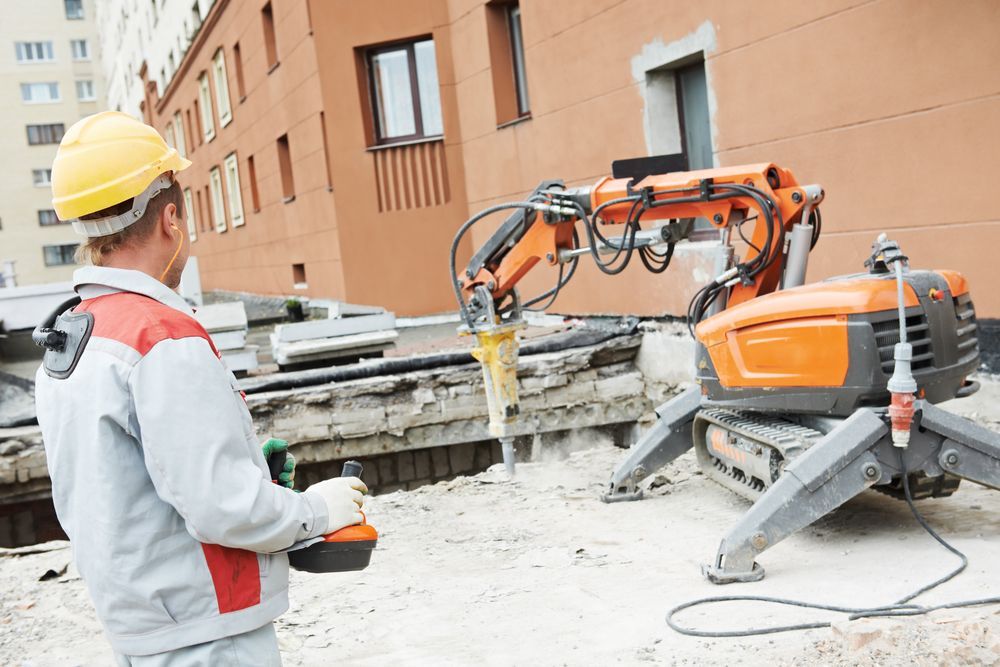
Automated features such as precision attachments and remote-operated machinery contribute to controlled dismantling in confined or high-risk areas. By reducing unnecessary equipment movement and refining material handling sequences, teams maintain steadier workflows across multi-phase projects and dense urban corridors.
Automation complements experienced operators rather than replacing them. Skilled crews interpret conditions, adjust strategies, and uphold safety standards that technology alone cannot meet. When intelligent systems and seasoned field leadership work together, demolition operations move forward with greater consistency, measurable accountability, and stronger adherence to schedule expectations set at the outset.
Reducing Environmental Impact with AI
For municipalities and property owners, environmental responsibility is closely tied to redevelopment strategy. Decisions made during preconstruction largely determine how much material is diverted from landfills and how efficiently resources are managed throughout the project. When evaluating whether to preserve or demolish an older building, data-backed analysis clarifies long-term environmental and economic outcomes.
AI-driven tools help teams assess material composition, identify recyclable components, and forecast debris volumes before mobilization. This supports more accurate waste diversion planning and improves coordination with recycling facilities and specialty haulers.
A structured sustainability review typically focuses on:
- Material recovery and recycling potential
- Hazardous material identification
- Transportation and disposal logistics
- Energy use and emissions tracking
By integrating environmental data into early planning, demolition aligns more closely with municipal sustainability objectives and community expectations. This analysis supports responsible redevelopment while maintaining the precision and accountability required on complex commercial projects in regulated urban environments and redevelopment districts.
What the Future Holds for Smart Demolition
As redevelopment projects grow in scale and scrutiny, technology will continue to shape how demolition is planned and executed. Data integration across preconstruction, field operations, and reporting will create stronger alignment between stakeholders, regulators, and project teams. Predictive modeling, equipment analytics, and sustainability tracking are becoming standard components of complex commercial work rather than optional add-ons.
For property owners, municipal leaders, and general contractors, the objective remains steady: controlled execution, transparent cost management, and accountable performance. Advanced tools contribute to those outcomes, while experienced leadership remains at the center of every successful project.
Alpine Demolition Services combines forward-looking technology with disciplined field operations to serve large-scale commercial and municipal clients throughout the Chicagoland area and surrounding communities. Organizations planning a redevelopment initiative can
contact the team and
request a bid tailored to their schedule, safety, and environmental goals.