The Role of PPE in Demo Operations
Share this article:
Demolition work is often shaped by timelines, budgets, and structural complexity. Still, it's the unseen risks that carry the most weight. Project leaders can’t afford to overlook what protects the people doing the work. Injuries, delays, or compliance issues typically trace back to gaps in basic safeguards. At Alpine, demolition PPE is integrated into every phase of the project to keep crews protected and jobs on track. Every project is different, but the need for consistent, high-quality protection never changes. Strong safety practices directly support a reliable
EMR rating, which reflects the level of care crews bring to the work every day.
Why PPE is Critical in Demolition Work
Demolition jobs rarely unfold in predictable environments. Crews navigate falling debris, shifting materials, sharp edges, loud machinery, and airborne dust. Often, all of these are present at once. Hazards remain present throughout the workday, influencing how crews move, communicate, and complete tasks from start to finish.
PPE gives workers the ability to focus on their job without being forced into workarounds that slow progress or increase exposure. It turns an unpredictable setting into one where movement is safer, communication is clearer, and productivity holds steady.
The impact isn’t limited to the person wearing the gear. Supervisors, contractors, and project owners benefit from fewer stoppages, less paperwork, and better outcomes across the board.
At Alpine, demolition PPE is built into the process from the start. It helps keep crews moving, jobs on schedule, and expectations aligned. When protection is prioritized early, safety becomes something you lead with, not something you manage after the fact.

Key Types of PPE Used on Demolition Sites
Each demolition site comes with its own set of hazards. The gear used on site needs to match both the pace of the work and the risks that come with it. Crews rely on specific equipment that protects them without limiting movement or visibility. When PPE fits the task, it becomes part of how the job gets done, not something that slows it down.
Common types of demolition PPE include:
- Hard hats to protect from overhead impact and falling materials
- Safety glasses and face shields to block dust, sparks, and debris
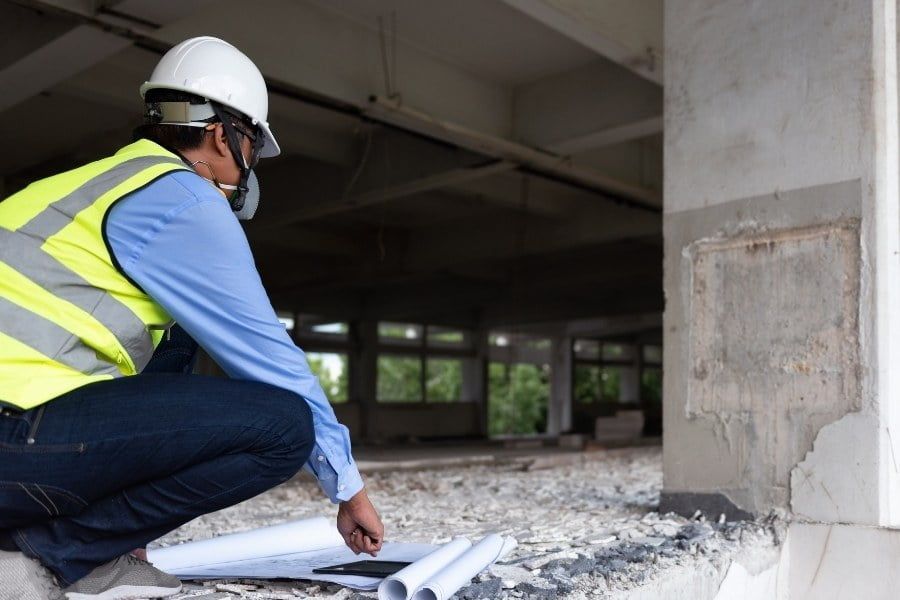
- High-visibility vests and clothing to improve awareness in active zones
- Respirators for protection against hazardous particles
- Steel-toed boots with puncture-resistant soles
- Cut-resistant gloves for safe handling of sharp or jagged materials
- Hearing protection to reduce long-term exposure to high-decibel environments
Each item plays a specific role. Together, they create a safer, more stable work zone.
How PPE Enhances Safety and Efficiency
Protective equipment plays a direct role in how well a demolition site functions. When workers have the right gear, they move with more confidence, take fewer unnecessary risks, and stay focused on the work in front of them. This steady pace not only prevents injuries but also keeps the job on schedule.
Delays caused by incidents, even minor ones, can lead to costly resets. PPE helps reduce those interruptions. It also strengthens communication and coordination between crews, especially when visibility is limited or equipment noise is high.
For supervisors, consistent use of PPE means fewer safety concerns to manage at the moment. It also makes compliance easier to track and document. For project owners, it’s a sign that the job is being handled with care.
Alpine builds PPE into the rhythm of every project. It’s part of how we maintain a clean, organized site and deliver consistent results, job after job.
Regulatory Standards and Compliance Requirements
Demolition work falls under strict safety oversight at both the federal and local levels. PPE use is a baseline requirement on nearly every job site, enforced through both federal regulations and project-specific safety plans. OSHA provides a clear framework, while many municipalities and project owners build on it with added precautions based on site conditions.
Contractors are expected to evaluate risks in advance and make sure crews are properly equipped before work begins. This includes:
- Conducting site-specific hazard assessments
- Providing PPE that aligns with known risks
- Training all workers on correct usage and care
- Inspecting and replacing worn or damaged gear
- Keeping documentation of safety meetings and PPE compliance
At Alpine, these steps are built into daily operations. Field teams know what’s expected long before the first piece of equipment arrives. PPE is incorporated directly into each
demolition plan, helping reduce exposure while reinforcing confidence across the project team.
Alpine’s Approach to PPE and Jobsite Safety
Alpine integrates safety into the earliest phases of project planning. Before crews arrive onsite, job-specific risks are reviewed, and PPE requirements are mapped into the schedule, logistics, and workflow. This makes protection part of how the job moves forward, not something that’s addressed in reaction to a problem.
Project managers, superintendents, and safety coordinators collaborate closely to make sure crews are trained, equipped, and aligned. That shared responsibility builds consistency across jobs and helps prevent missteps in the field.
Supervisors monitor PPE use throughout the day, but strong habits are already in place before work begins. Crews know what’s expected, and equipment is stocked and maintained so nothing slows down progress.
This level of preparation creates stable, organized jobsites where crews can focus on the work instead of reacting to safety gaps. It sharpens communication, keeps delays to a minimum, and strengthens accountability at every stage. Clients recognize this in the way each phase stays aligned, crews stay ready, and issues are handled before they escalate.
Building a Culture of Safety Through Proper PPE Use
Rules set the minimum, but lasting safety comes from habits formed on the ground. Crews respond best when expectations are clear, gear is available, and responsibility is shared. When PPE is part of the routine, not a reminder, safety becomes something the team carries forward without hesitation.

At Alpine, that consistency is built into the work. Field leaders model it, crews follow through, and the job moves without constant course correction.
This approach helps projects stay aligned from day to day, resulting in fewer disruptions, stronger communication, and a clearer path to completion. If you're planning a demolition project and want a team that treats safety as a core part of execution, Alpine is ready to help.
Connect with the Apline team to begin planning your next project.