How Data Center Construction Drives Industrial Demolition
Share this article:
When a hyperscaler announces a new data center campus, the first contractor on-site may be tearing down existing buildings rather than pouring concrete. Chicagoland and Northern Illinois are experiencing a major data center buildout, creating redevelopment opportunities for aging industrial facilities, warehouses, and commercial properties. These sites have infrastructure advantages, but clearing them involves more than removing structures. For developers, general contractors, and facility managers, early demolition planning can prevent expensive construction delays.

How the Data Center Construction Boom Is Reshaping Illinois
Data center construction is accelerating as artificial intelligence and hyperscale computing increase the need for facilities with substantial electrical capacity. According to CBRE's North America Data Center Trends H1 2025 report, vacancy across primary North American markets fell to 1.6% during the first half of 2025.
Chicago remains a leading data center market. Elk Grove Village, frequently called "Data Center Alley," is an established hub, while development interest extends toward Aurora, Elgin, DeKalb, and the I-88 corridor. Power availability remains a major obstacle, with large transformers facing multiyear procurement timelines. Developers must evaluate utility capacity early because securing a suitable parcel does not guarantee timely electrical service.
Why Data Center Construction Targets Existing Industrial Sites
Although building on vacant farmland might seem straightforward, established industrial properties have advantages that undeveloped parcels may lack.
Developers evaluate existing industrial sites for four reasons:
- Electrical infrastructure:
Proximity to substations and established transmission corridors may reduce infrastructure challenges.
- Industrial zoning: Existing zoning classifications can simplify certain land-use approvals.
- Fiber connectivity: Established highway and rail corridors may contain nearby telecommunications infrastructure.
- Contiguous acreage: Older manufacturing campuses sometimes occupy large parcels within municipal boundaries.
Existing electrical infrastructure does not guarantee sufficient power capacity. However, vacant acreage near suitable infrastructure is limited in densely developed areas. Redevelopment can present a practical alternative, especially when existing utility corridors and road access reduce the need for extensive off-site improvements.
This approach resembles other redevelopment projects, including
office buildings replaced with residential subdivisions, where demolition prepares properties for new uses.
Industrial Demolition and Data Centers: Where the Work Begins
The relationship between industrial demolition and data centers begins during feasibility planning, before construction crews mobilize. A demolition contractor typically participates in four stages:
- Site evaluation: Review existing structures, foundations, underground utilities, and potential environmental hazards.
- Permitting: Coordinate demolition permits and notifications alongside the developer's zoning and construction approvals.
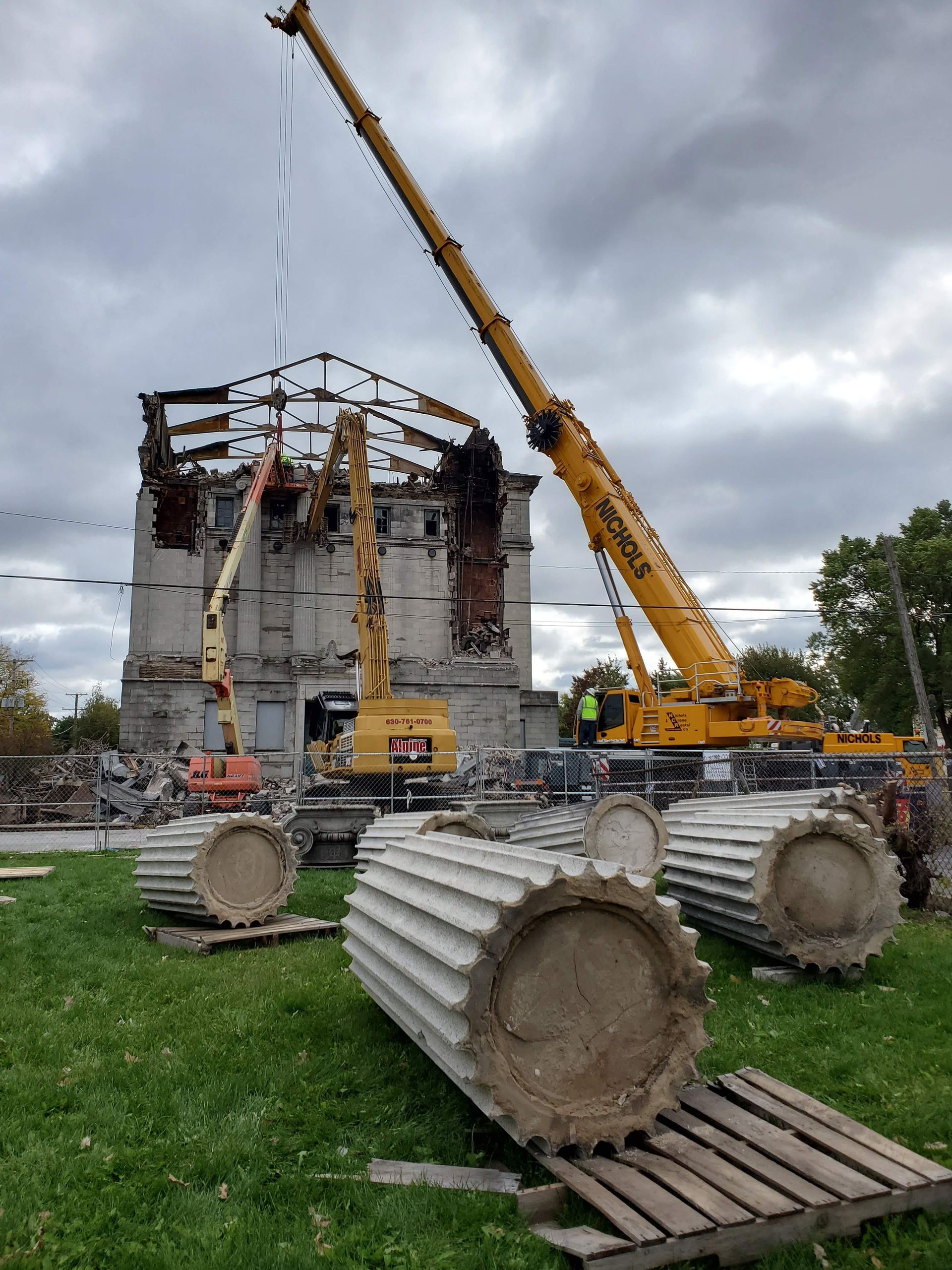
- Site clearance: Remove structures, manage debris, and process recyclable materials where feasible.
- Site handover: Complete the agreed clearance scope so geotechnical investigations, civil improvements, and foundation work can proceed.
Developers planning
industrial demolition for data center site clearing benefit from identifying underground obstacles and environmental concerns early. Unexpected discoveries can delay subsequent trades, extend property carrying costs, and disrupt construction milestones. Establishing removal limits and handover expectations before mobilization helps keep the demolition scope aligned with the construction schedule.
What Industrial Demolition Removes for Data Center Construction
Industrial redevelopment involves structures with different removal challenges:
- Manufacturing plants from the 1960s through 1980s: Reinforced concrete slabs, equipment pits, embedded utilities, and machinery foundations extending below floor elevations.
- Warehouses and distribution centers: Slab-on-grade concrete, loading docks, structural steel with potential lead coatings, and buried drainage systems.
- Telecommunications facilities: Electrical rooms, battery systems, underground conduit, and specialized mechanical infrastructure.
- Vacant big-box retail buildings: Large roof assemblies, extensive pavement, and outdated utility connections.
- Obsolete office campuses: Complex mechanical systems, connected buildings, and potentially asbestos-containing roofing materials.
Projects involving
demolishing old industrial sites for new data center construction benefit from detailed structural assessments and clearly defined removal limits. Underground foundations and abandoned utility lines deserve particular attention because they can interfere with future excavation and foundation installation.
How Demolition Prepares a Site for Data Center Construction
Site clearance follows a coordinated sequence, beginning with environmental surveys to identify asbestos, hazardous substances, and necessary abatement. Utility disconnections follow, with electrical, gas, water, and telecommunications providers coordinating shutdowns. Scheduling these disconnections can take considerable time, especially at facilities with multiple service connections.
Next, crews remove hazardous materials and selected interior components, including switchgear, transformers, storage tanks, and regulated fluids. Excavators then dismantle structures in controlled sequences, using high-reach equipment when appropriate.
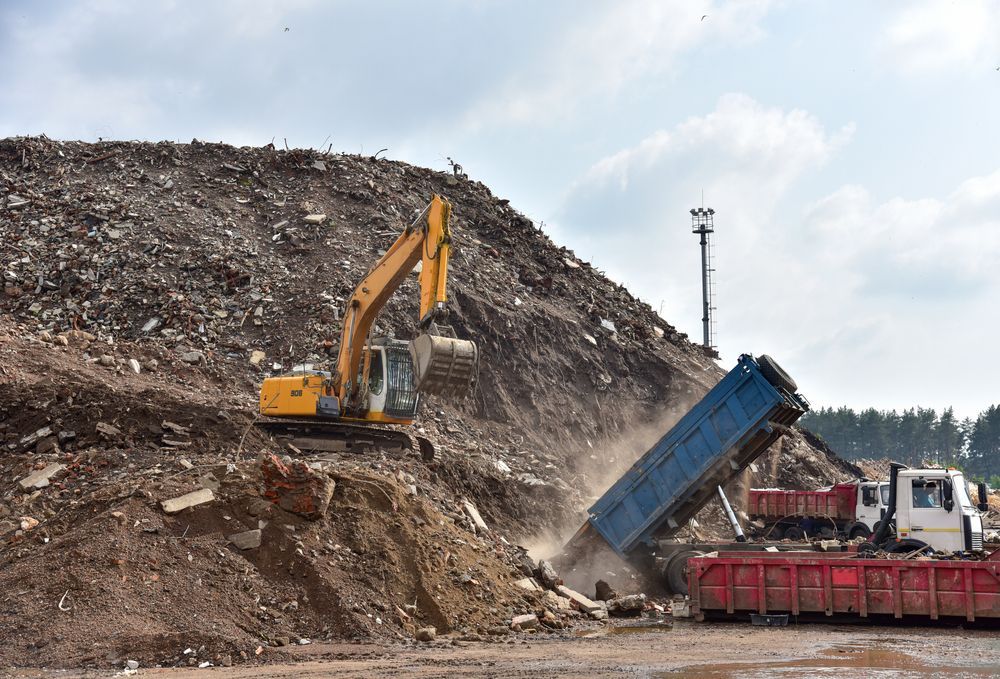
Suitable concrete may be crushed on-site for approved reuse as fill or sub-base material, reducing disposal trips. Crews then complete debris removal, preliminary grading, and stabilization before documenting site conditions for handover.
Throughout demolition, dust suppression, noise restrictions, truck routing, and neighboring business operations need careful coordination, particularly in occupied industrial districts.
Managing Asbestos, NESHAP, and Brownfield Conditions
Older industrial properties may contain asbestos, contaminated soils, underground tanks, and other environmental hazards. The EPA's asbestos NESHAP regulations establish inspection, notification, and work-practice standards for covered demolition activities, regardless of building age.
Historically contaminated sites may also need investigation or remediation under the
Illinois EPA's Brownfields Redevelopment Program. Depending on contamination and regulatory approvals, environmental work can add months to preconstruction schedules, affecting power and financing milestones. Early environmental assessments help developers account for these potential delays before committing to construction start dates.
Alpine's discussion of
brownfields for reuse explains how demolition contributes to industrial property redevelopment.
Why Chicago's Data Center Growth Is Driving Demolition Demand
Elk Grove Village remains a major concentration of Chicago-area data centers. As redevelopment expands, data center alley demolition work in Elk Grove Village highlights the importance of contractors familiar with local industrial properties and municipal requirements. Nearby Franklin Park and Mount Prospect also contain established industrial properties with redevelopment potential.
Farther west, DeKalb's Meta campus demonstrates the region's expanding reach. Aurora, Elgin, and the I-88 corridor present additional opportunities for industrial redevelopment.
Based in St. Charles, Alpine Demolition Services operates throughout Chicagoland. With approximately 60 years of experience and a portfolio associated with Ryan Field, the Wrigley Field expansion, and the House of the Good Shepherd campus, Alpine brings extensive demolition experience to complex site-clearing projects.
Prepare Your Data Center Site With Alpine Demolition
Successful data center development begins with accurate site assessments, realistic schedules, and coordinated demolition planning. Alpine Demolition Services works with developers, general contractors, and commercial property owners throughout Chicagoland on projects ranging from selective interior removal to large-scale structural demolition.
Contact Alpine Demolition to discuss an industrial redevelopment project, request an estimate, or begin planning site clearance.