Differences Between Demolition and Dismantling
Share this article:
Demolition and dismantling often show up in the same bid package, though the terms aren't interchangeable. Both remove structures or components, yet the crews, machinery, schedule, and fate of the materials can differ significantly. The demolish vs dismantle question comes down to three things: the structure’s condition, what has to survive the work, and what the site needs next.
What Is Demolition?
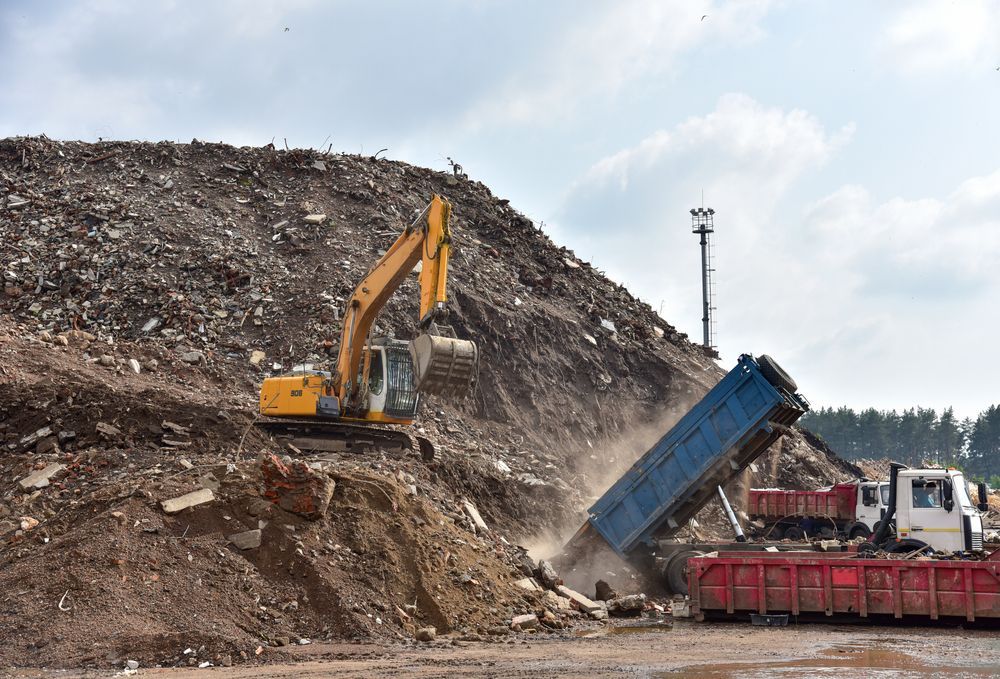
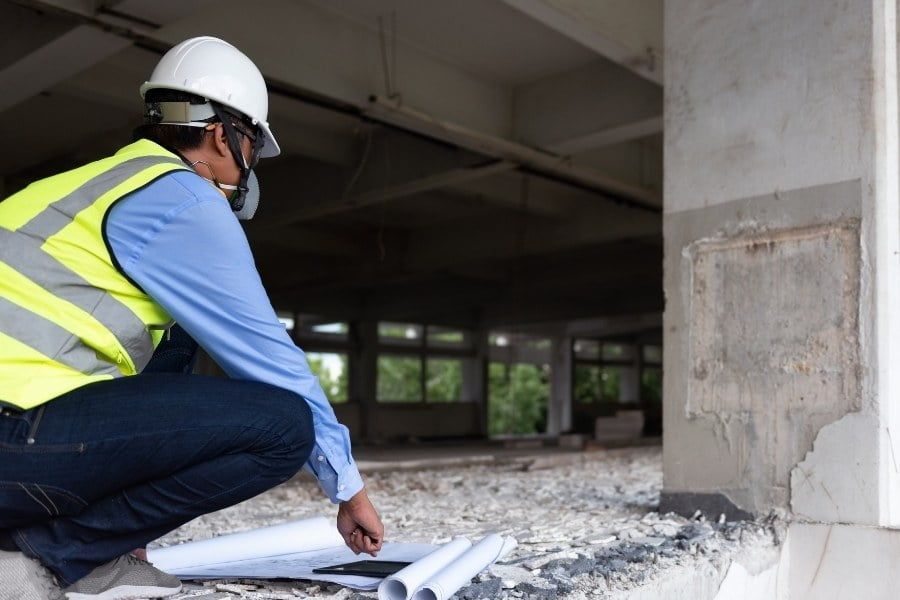
Demolition is the planned removal of all or part of a structure using heavy machinery, with the goal of clearing space quickly and safely. Materials are broken apart during the work, then sorted on site so concrete, brick, and metals can be recycled, and the rest hauled away. Commercial demolition ranges from gutting a single floor to taking down a multi-story building. Before work begins, OSHA mandates a written engineering survey by a competent person to check the framing, floors, walls, and risk of unplanned collapse.
What Is Dismantling?
Dismantling is the planned disassembly of a structure or system so selected components remain intact. Crews unbolt, cut, rig, and lift structural steel, machinery, bridge sections, or architectural features for reuse, resale, or relocation. The process is often called dismantlement in industrial settings or deconstruction when recovering building materials for reuse. Because components require careful handling, dismantling generally moves slower than demolition but gives owners greater control over what is saved.
Which Projects Require Demolition vs. Dismantling?
Projects That Typically Require Demolition
Demolition is the usual choice when the structure has little reuse value, and the site needs to be cleared for what comes next. Common examples include full teardowns for redevelopment, fire-damaged buildings too unstable for crews to enter, obsolete industrial facilities, and aging suburban offices replaced by new subdivisions. Partial work counts too:
selective commercial demolition removes floors, walls, or wings while the rest of the building stays in service. In each case, speed and efficient debris processing drive the schedule.
Projects Where Dismantling Makes More Sense
Dismantling fits when something on site is worth more intact than as scrap, or when the surroundings leave no room for heavy impact. That includes machinery an owner plans to relocate or sell, bridge components coming out ahead of replacement sections, and historic features slated for preservation. In one active plant, Alpine dismantled and removed an industrial tapeline machine with zero downtime for the owner. Tight urban sites with occupied neighbors also favor a piece-by-piece approach.
How Alpine Determines the Right Method for Each Project
Choosing a method starts with evaluating several factors. What is the structure's condition? A fire-weakened wall can rule out hand work. Which components must be preserved, and who determines their value? What surrounds the site, including occupied buildings, utilities, traffic, or rail lines? Are asbestos, lead, or other regulated materials present that may require special handling or abatement?
The final consideration is what comes next: new construction, earthwork, or a facility that must remain operational.
Alpine builds its estimates around attention to detail, and a thorough estimate typically takes one to two weeks. This evaluation helps ensure the proposed method reflects actual site conditions before work begins.
Equipment and Techniques Used in Demolition and Dismantling
Demolition runs on hydraulic excavators with interchangeable attachments: shears for steel, pulverizers for concrete, hammers for foundations, and grapples for sorting debris. Tall structures call for high-reach excavators that work from the ground at a safe distance. Alpine recently added a high-reach machine with a 118-foot reach, the largest in the Chicagoland market and one of only four of its type in the United States.
Dismantling leans on cranes and experienced rigging crews that lift members out whole. Torch and saw cutting separate connections, aerial lifts put workers at bolt level, and remote-controlled demolition robots handle confined or sensitive interiors.
Demolition dust control measures, including misting systems and water cannons, help limit airborne debris during both methods.
When a Project Requires Both Demolition and Dismantling
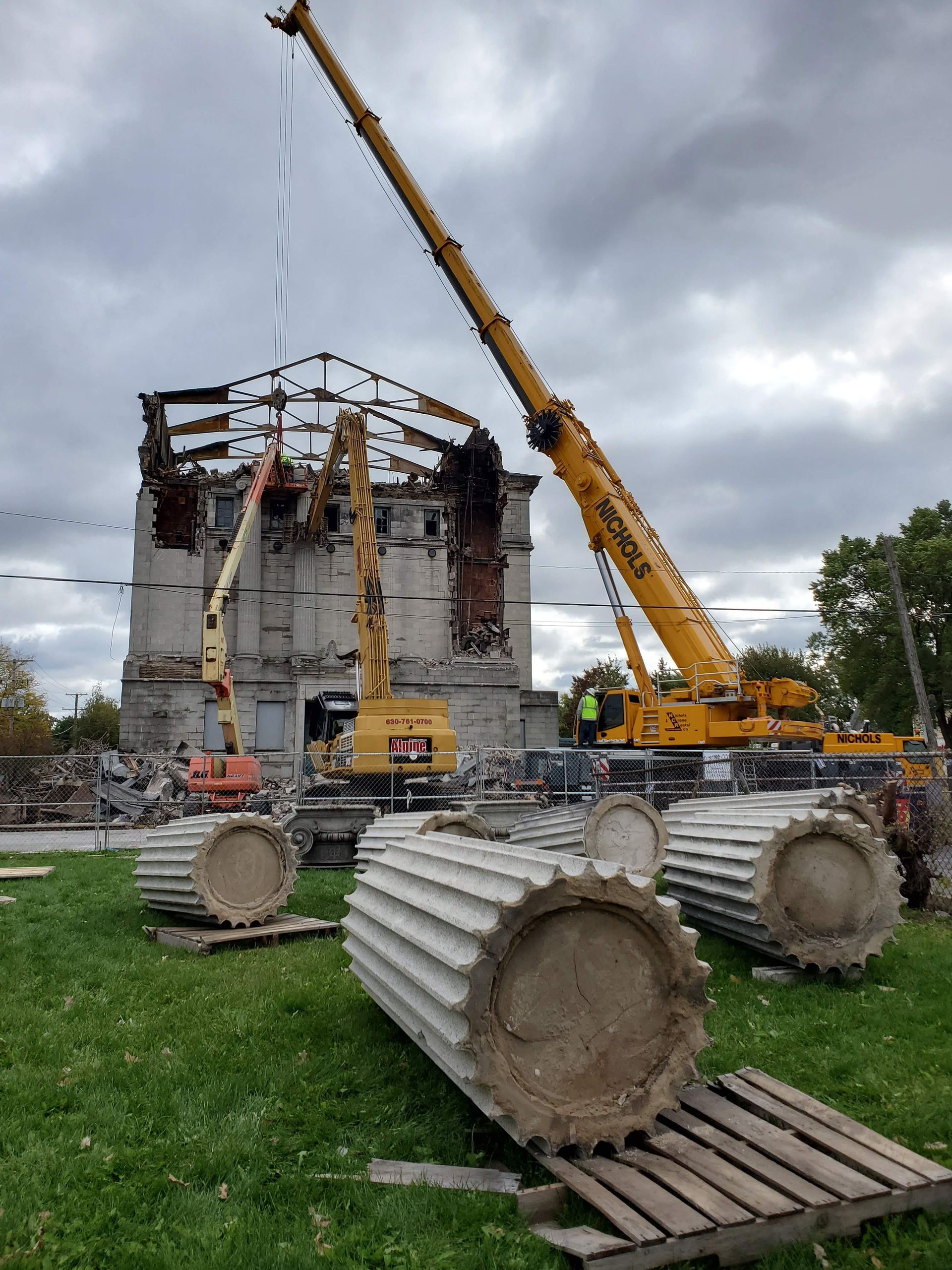
Many commercial and industrial demolition projects combine both methods, particularly when certain components need to be preserved while the surrounding structure is removed. The Aurora Masonic Lodge is a clear case. In October 2019, a fire left the five-story building unstable, and city officials worried it could collapse onto neighboring homes and utilities. The city solicited bids on October 9, awarded the work to Alpine on the 10th, and crews were on site the 11th.
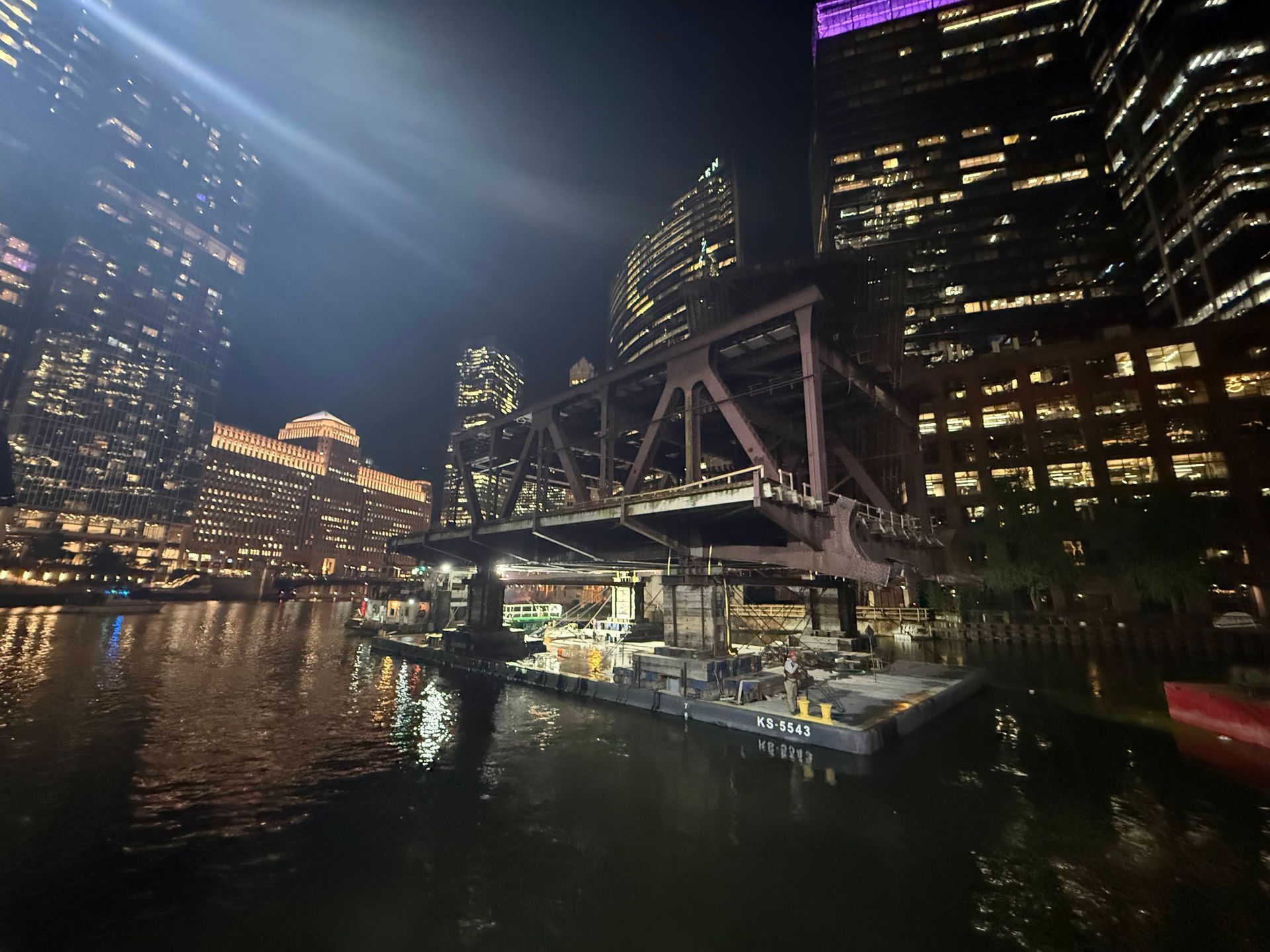
The historic outer columns were dismantled and salvaged while the weakened main structure was demolished. The job finished with no damage to adjacent property and a clean lot. More recently, Alpine removed the west leaf of Chicago's 110-year-old Lake Street bridge so a new leaf could be installed, an upgrade intended to preserve the bridge's historic character.
Salvage and Material Recovery: What Happens to Removed Materials?
In suburban and unincorporated Cook County, demolition debris diversion requirements apply to covered projects. These generally include diverting at least 70 percent of debris by weight from landfills, with an additional 5 percent reuse requirement for applicable residential projects. A debris diversion plan is part of permit approval. Concrete, brick, and structural steel carry most of that weight.
Dismantled components usually hold more value, since an intact beam, column, or working machine sells for more than the same metal as scrap. Ownership matters as well. Many demolition bids assume the contractor keeps the scrap and price that credit into the number, so owners who want materials returned should say so before bids go out.
How Demolition vs. Dismantling Affects Costs and Timelines
Demolition generally costs less upfront and moves faster, while dismantling adds labor, rigging, and careful material handling. However, site conditions and salvage opportunities can change the overall cost of either approach.
| Factor | Demolition | Dismantling |
|---|---|---|
| Labor | Smaller crews, more machinery | More specialized labor and rigging |
| Equipment | Excavators and hydraulic attachments | Cranes, lifts, and cutting tools |
| Timeline | Generally faster | Slower due to sequential removal |
| Material Value | Primarily scrap and recycling | Potential reuse, resale, or salvage value |
| Site Conditions | Depends on equipment access and debris handling | Can accommodate tight or sensitive areas |
When comparing demolish vs dismantle bids, owners should review the same scope, salvage terms, site protection measures, and schedule assumptions. A lower initial price doesn't always mean a lower final project cost.
Plan Your Demolition or Dismantling Project With Alpine
Choosing between demolition and dismantling starts with understanding your project's scope, site conditions, and schedule. Alpine Demolition Services brings detailed estimating, experienced crews, and a commitment to safety to every project.
Ready to discuss your demolition needs? Call (630) 761-0700 or
submit a bid request to get started.