How to Execute a Safe Water Tower Demolition
Share this article:
A safe water tower demolition starts with a structural assessment, utility shutoffs, hazardous-material testing, and a removal plan based on the tower’s condition and surroundings. Height, available setback, nearby buildings, utilities, and site access then determine how the structure should come down.
Careful planning before any cutting begins helps control the fall or dismantling sequence, protect surrounding property, and account for hazards such as lead-based coatings. From there, work progresses through site preparation, controlled removal, recycling, and restoration.
Why Aging Water Towers Get Demolished (Not Renovated)
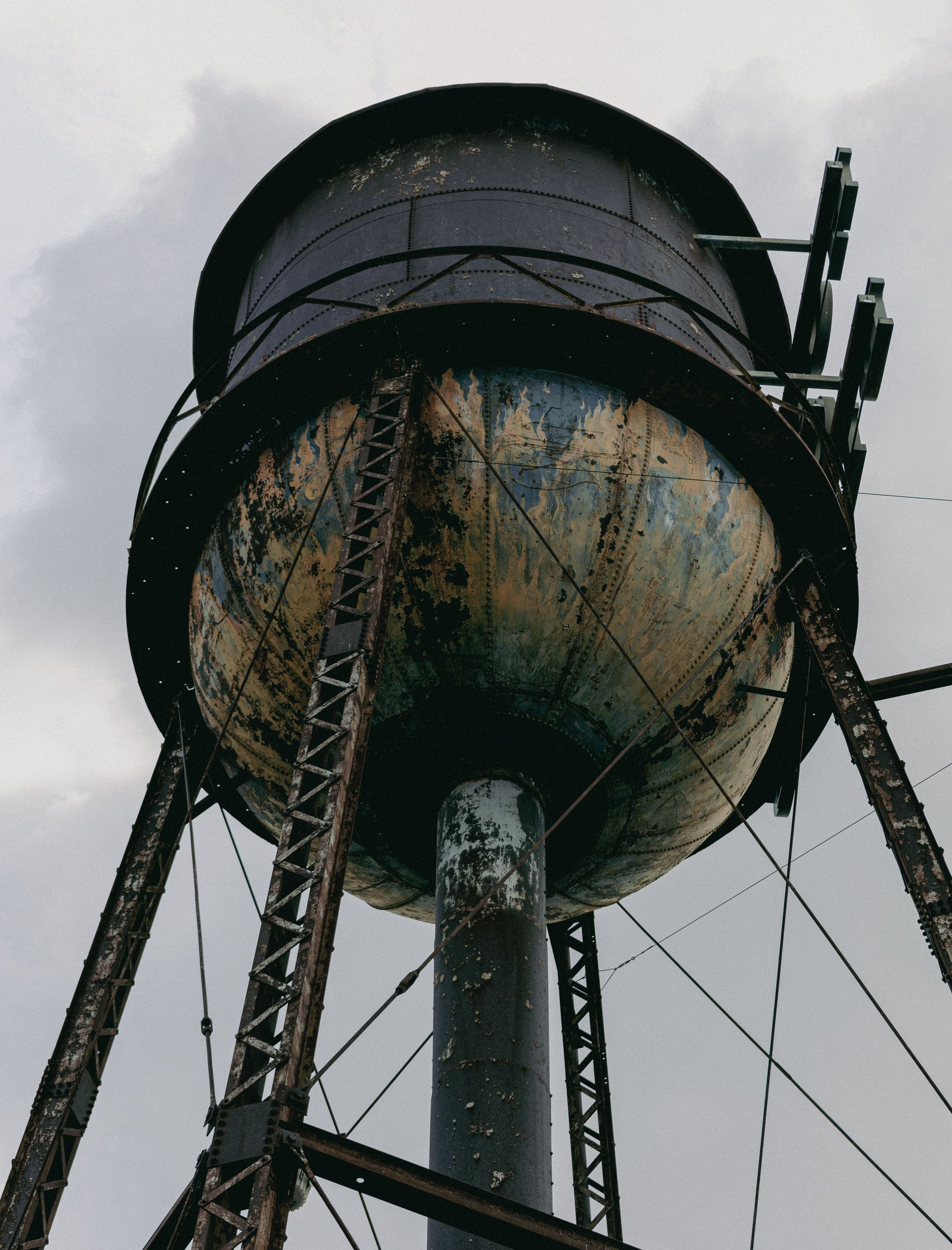
Are water towers still used? Yes. Elevated tanks remain part of many municipal water systems, storing water while maintaining consistent pressure. An individual tower, however, may become obsolete as infrastructure changes, capacity needs increase, or a replacement tank comes online.
Renovation also becomes less practical when structural deterioration, outdated coatings, repeated maintenance, or hydraulic limitations outweigh the tower’s remaining service life. Municipalities may then choose removal as part of broader
industrial demolition and infrastructure planning. The decision typically considers structural condition, operating needs, long-term costs, and future use of the property rather than age alone.
Permits, Utility Shutoffs, and Community Notifications
Before demolition begins, the project team must confirm applicable permits, assess structural conditions, disconnect affected utilities, and establish controls for the surrounding area. Requirements vary by municipality and site, so early coordination can prevent avoidable delays.
Key pre-demolition tasks may include:
- Permits: Confirm demolition permits, environmental notifications, and traffic-control requirements.
- Utilities: Identify active and abandoned connections, then shut off, cap, relocate, or protect them as needed.
- Notifications: Coordinate timing with municipal departments, neighboring properties, businesses, and other affected parties
- Engineering survey: Evaluate structural condition and potential collapse hazards.
- Public access: Plan road, sidewalk, or property closures around the work zone.
These steps establish safe working conditions before removal begins.
Handling Lead Paint and Legacy Hazards Before Cutting
Older water towers may have lead-based paint or other hazardous coatings that can be disturbed during demolition. Testing before cutting identifies these materials and helps determine appropriate worker protections, containment measures, demolition methods, and waste-handling procedures. Asbestos-containing materials may also be present in certain associated components and should be identified during pre-demolition inspections.
The planned cutting method matters as well. Torch cutting, welding, and other hot work on lead-coated steel can create significant exposure hazards, while mechanical methods present different considerations. Hazard assessments and applicable environmental and worker-safety requirements should therefore be incorporated into the demolition plan before crews begin disturbing coated materials.
How Method Selection Depends on Height, Site, and Setback
No single demolition method fits every tower. Height, construction, structural condition, equipment access, ground conditions, and available setback all influence the safest approach. Nearby buildings, roads, power lines, and buried utilities also affect the plan.
Our services account for these site-specific conditions when determining how removal should proceed.
Mechanical Dismantling with High-Reach Excavators
High-reach excavators can dismantle suitable towers progressively from the upper sections downward, keeping removal controlled within a defined work area. The approach depends on the tower’s material, structural stability, equipment reach, and available operating space. Ground conditions must also accommodate heavy machinery at safe working distances. For tighter sites, sectional removal can limit the area affected by falling material and simplify debris processing as demolition progresses.
Mechanical Dismantling with High-Reach Excavators
A controlled fall may be considered when a steel tower has enough surrounding clearance for an engineered fall path and exclusion zone. Crews strategically weaken or cut structural members so the tower moves toward a predetermined area. Structural condition, wind, nearby utilities, and surrounding property all factor into the plan. After the tower reaches the ground, equipment can process the steel into manageable sections for recycling and removal.
Mechanical Dismantling with High-Reach Excavators
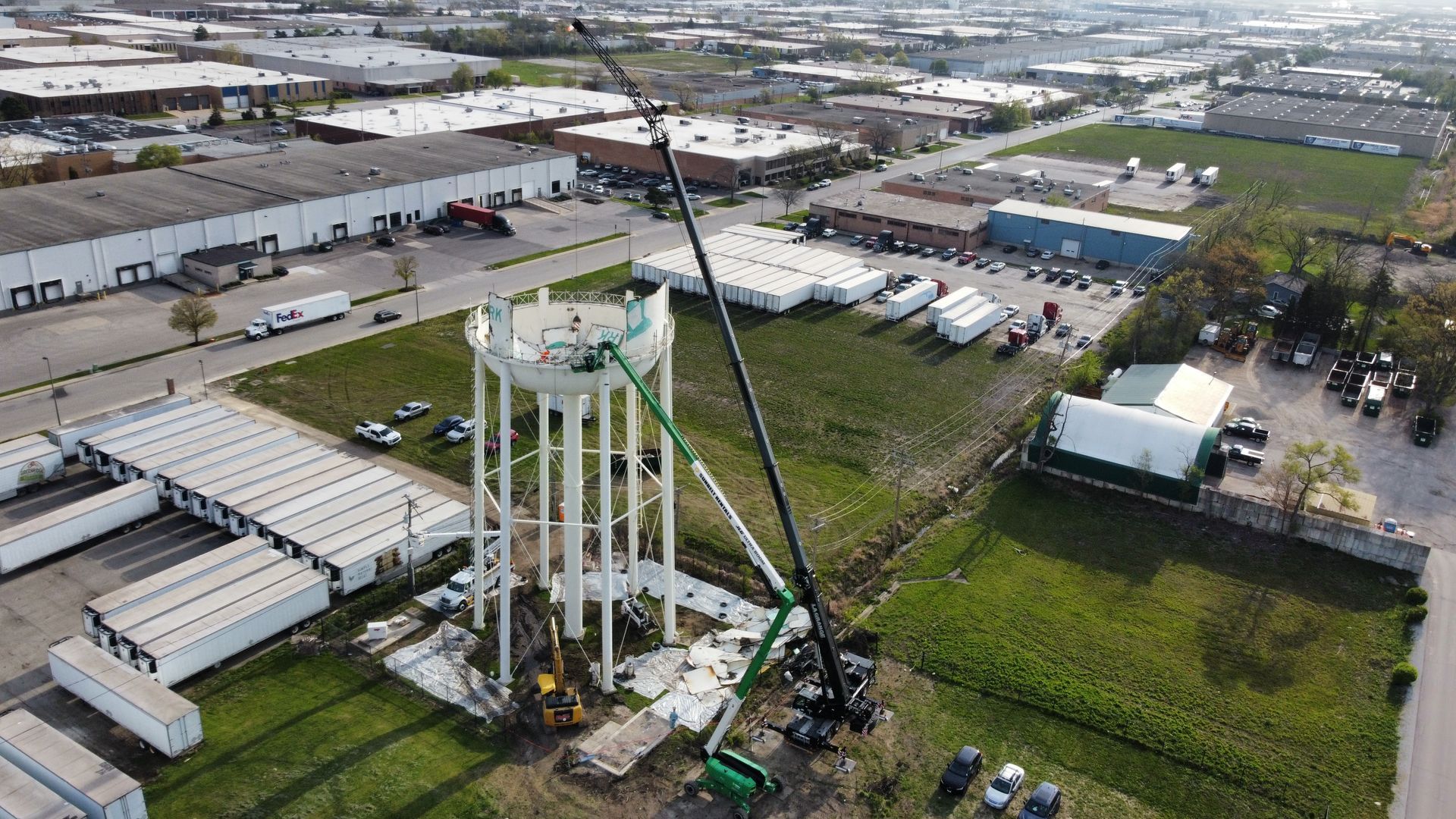
For many tank demolition projects, Alpine uses a crane and a manlift to dismantle the structure in controlled sections. The crane supports each section while workers in the manlift access planned cutting points. From there, the process follows a deliberate sequence:
- Attach crane tension: Connect certified rigging lines and pre-load the bowl or roof section before cutting.
- Cut sections: Use cutting torches to divide roof plates or side panels into safe, weight-rated sections.
- Lower pieces: Hoist each cut component to the ground sequentially for processing, recycling, or disposal.
This approach maintains control as the tank is dismantled from the top down.
Inside the Water Tower Demolition Sequence, Step by Step
Once planning and hazard controls are complete, fieldwork follows a defined sequence based on the selected method and site conditions. A typical
tower removal progresses through these stages:
- Secure the site: Establish exclusion zones, access controls, and equipment staging areas.
- Complete decommissioning: Verify the tank is drained and applicable utilities are disconnected.
- Process debris: Separate and size steel, concrete, and other materials for transport.
- Execute removal: Follow the planned crane-assisted dismantling or controlled-fall sequence while monitoring structural and site conditions.
- Prepare the structure: Address piping, antennas, ladders, platforms, and other appurtenances as planned.
- Prepare the structure: Address piping, antennas, ladders, platforms, and other appurtenances as planned.
Site Restoration, Scrap Recycling, and Final Handover
After the structure is down, crews separate steel, concrete, and other debris according to the project’s recycling and disposal plan. Recoverable steel can be sent for recycling, while regulated materials are handled according to applicable requirements. Foundations may be removed completely, cut below grade, or retained when specified for future site use.
Final restoration depends on what comes next for the property. Work may include removing temporary controls, backfilling excavations, grading disturbed areas, and addressing remaining utility terminations. Before handover, the completed scope should be reviewed against project specifications so the municipality, owner, or general contractor receives the site in the agreed-upon condition.
Ready to Plan Your Water Tower Demolition Project?
Every water tower demolition presents a different combination of structural conditions, environmental hazards, surrounding infrastructure, and site constraints. Defining those conditions early helps municipalities, property owners, and general contractors establish a realistic scope, select an appropriate removal method, and reduce uncertainty before fieldwork begins.
Alpine Demolition Services brings careful estimating, detailed project planning, and close attention to safety from initial assessment through final site restoration. If an aging or decommissioned tower needs to come down,
contact us to discuss the site, project requirements, and next steps. A well-defined plan can turn a complex removal into a controlled, well-coordinated project.